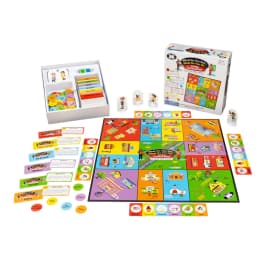
What Do You Say..What Do You Do.. In Community
Educational games
PEP policy guidance
A deterministic result from the reviewed 2026–27 rule pack. It is guidance, not a funding guarantee.
The reviewed source is stale. Recheck the current official guide before relying on this guidance.
- Program and school year
- FTC-PEP · 2026-27
- Rule pack
- step-up-ftc-pep-2026-27 · v1.0.1
- Evidence level
- Official general rule
- Source freshness
- Stale · Low
How this result was reached
The engine applies explicit rules in precedence order and records what is still unknown.
Verify the exact item, documents, funds, and payment path in EMA.
Rules applied
- Official verification is required when evidence is insufficient
PEP-2026-27-GENERAL-OFFICIAL-VERIFICATION
Information still needed
- Current official category match
- Exact item match in the official portal
- Required supporting documents
- Available account balance
Product description
<p>Prepare your students for life outside the home and classroom! <em>What Do You Say...What Do You Do... In the Community?</em> is an interactive, open-ended game that builds social and decision-making skills appropriate for a variety of situations.</p><p>Students move around the colorful community game board and answer social-skills questions. With each correct answer, they collect a token and try to fill a token strip. The first to fill the token strip, or collect the most tokens, wins!</p><p>Students will visit places on the game board common to all communities: doctor's office, police station, library, fire station, hospital, courthouse, city hall, park, grocery store, restaurants, and more. The Social Situation Cards target several different settings. The open-ended questions encourage students to problem-solve and are excellent for role-play.</p><p><em>What Do You Say...What Do You Do... In the Community?</em> includes:</p><ul><li>6 Categories of Social Situations: Medical, Outside, Places to Eat, Stores, Business/Government, All Around</li><li>390 Community Situation Cards (3?" x 1?")</li><li>Illustrated Community Game Board (18" x 18")</li><li>144 Laminated Community Tokens</li><li>6 Community Characters and 6 Token Strips with Die</li></ul></div>
Source evidence
These fields describe where the listing came from. They do not establish funding eligibility.
- Catalog
- FESUA_Super Duper Publications
- Source type
- Search
- Link status
- Stepup product link
- Enrichment confidence
- Unknown
Official policy source
Policy guidance is tied to this reviewed source and version.
- Publisher
- Step Up For Students
- Applies to
- FTC-PEP · 2026-27
- Effective dates
- Jul 1, 2026 — Jun 30, 2027
- Source last modified
- Jul 14, 2026
- Reviewed by Navigator
- Jul 23, 2026
- Review due
- Aug 14, 2026
Verify the exact item, documents, funds, and payment path in EMA.
Open the official Step Up login page, sign in directly, and verify the exact item, required documents, available funds, and payment path.
Secure official handoff. Easy Homeschool does not request, collect, or transmit your Step Up credentials.